Davenport, Florida | I hammered our Board for months when it came to their fresh baby, a newly minted group called the Davenport Economic Development Council. I hammered them for months, questioning the Board about what was going on with that group. They couldn’t answer nor were they curious about it, that is, until we all found out at the same time in a commissioners’ meeting by the treasurer of that group, an alleged accomplice, that about $10,000 may have been essentially stolen by a former mayor. In response to that sudden, shocking public disclosure, current Commissioner Wayne Thomas Fellows was quoted as saying “move on.” The Board, in its allegiance to this family, went with that decision without engaging in any discussion nor providing any justification for moving on.
I am now on them again ̶ that Board of Commissioners for the City of Davenport ̶ about Article 2 of the Charter. But, before I tell you what happened, please note that the information I’m presenting here was not my job to discover. It was the job of any one of the members of our Board of Commissioners, none of whom, I believe, have ever even read the city attorney’s interpretation of our Charter in January 2025. Now, to move on.
Following is a review of what happened in the City of Davenport in 2025, just last year, regarding the election of the commissioner on Seat 3. Let’s start with the written document in our City Charter.
The City of Davenport Charter states and I quote: “A person may not be elected to more than two (2) consecutive three (3) year terms. At the expiration of the second term, that person shall not be eligible to serve as a Commission Member, either by appointment or by election for a period of one (1) year.”
Clear enough? Apparently, no, it wasn’t, not for the city’s lawyer, Mr. Cloud.

In short, city attorney Thomas Cloud’s interpretation changed the Charter’s plain English to this: At the expiration of the second term, disqualification occurs only after one has become a commissioner, not while one is a candidate to be elected to become commissioner.
In addition to changing the meaning of this section, Cloud cited the irrelevant precedent of Wright v. City of Miami Gardens.
This is what was written to me by a loyal reader of mine: What happened here is that when an attorney lacks a strong legal basis to justify an action (in this case, qualifying a clearly ineligible candidate), they may invoke a loosely related precedent — like what Cloud did citing Wright v. City of Miami Gardens. They do this to muddy the waters and shift the burden. The attorney effectively passed the responsibility to the public or another party to challenge it in court — rather than addressing the disqualification head-on.
That loyal reader’s allegation is evidenced by the fact that Cloud is unresponsive to requests for an example of how his interpretation would apply in practice, leaving voters to figure it out for ourselves. It’s about forcing constituents to sue the government when it is abundantly clear that suing is not only not our job, it is something that not even one voter can handle in our currently very unaffordable America.
But! I believe I have figured it out.
Tom Cloud’s interpretation in practice and using his words is this: If W.T. Fellows had been sworn-in and seated before April 16, 2025, which day he was eligible to run, then the sitting board would have had the right to kick him off the commission, but only after he had been sworn-in and seated because one doesn’t become a board member until that last step happens. But then, if the board kicked him off, there would have to be another election to fill the newly vacant seat. Does that make any sense at all?
No, disqualification occurs at the beginning of an election cycle, during the qualification period. Disqualification after an election is over and done with? Why, that’s just preposterous. I allege that Thomas A. Cloud misrepresented this section of the Charter in order to obtain a specific result, the election of Mr. Fellows to a ninth term.
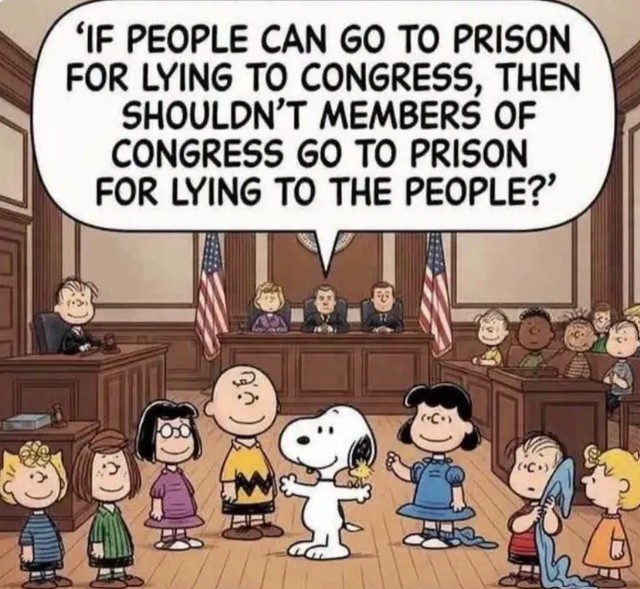
It was a masterful piece of legal theatre but it was well beyond wrong. It appears to have been illegally wrong, but that only means that someone has to sue for any accountability to occur. If no one does that, then none will ever exist for this violation of the City Charter. Then the precedent of Cloud’s interpretation stays, which would mean that Davenport does not have had an official and effective term limit rule and hasn’t had one since since January 2025, and never will until something is done about what Cloud did to constituents without our knowledge. (That is, without our knowledge until now.)
Mary Trump recently said that “the future of our democracy depends upon getting as many people as possible to recognize that the strongest societies are built ̶ not upon dogma or blind loyalty ̶ but upon reasoned analysis, intellectual curiosity, ethical behavior, and a willingness to change our minds when the evidence demands it.”
In this case, the evidence is demanding ethical behavior from our Board of Commissioners. Will their legacies include changing their minds because the evidence demands a correction of this violation? Will they bend towards ethical behavior this time?
Discover more from Darhlene.com
Subscribe to get the latest posts sent to your email.

Leave a Reply