After I published an article on the history of a local community, I realized just how much African-American history is smushed below any other history of America. Right before our eyes, the histories of any people, other than White, had remained very often undocumented by history books. While these histories have risked complete disappearance from our knowledge, they are not yet gone and are actively being re-documented, that is, re-introduced to us Americans. It is truly amazing how these histories were kept from dying. Yes, we are one amazing species! Clint Smith’s book, How the Word is Passed, tells us all about it.

Clint’s book reads a bit like a poetic travel guide, literally. As he waxes poetic in every chapter, it is not excessive. However, it still is in the book with regularity. That style provides the distinct sense that we are not talking about institutions of tremendous brutality but about nature, about human beings, certain ones, who to this day continue to build and support these institutions.
While I am in the process of documenting the near disappearance of one tiny part of one community’s history, Clint provides us with a much more large-scale analyses in seven chapters. Following are the titles to each of his chapters with my take. It is a book worth buying, both for reading and for learning how the word is passed from one generation to the next, ensuring that even the smallest of histories will never be forgotten.
Monticello
The real history of Monticello and its apparently fiscally flamboyant owner, Thomas Jefferson, was not completely new to me when I read this first chapter of Clint’s book. What was new was Jefferson’s financial extremities and the degree to which he contradicted his stated public beliefs in his life at Monticello. What blew me away was that after Jefferson’s death, over 200 slaves were sold to pay his debt. Yet, in his will, only one slave was freed. Nice going, Tom!

The Whitney Plantation
While Monticello explains its own history to tourists by covering Jefferson far more than they cover the hundreds of slaves he kept in bondage, the Whitney Plantation in Louisiana is different. It is unique in that it does cover what happened to African-Americans there on their plantation.
The Whitney Plantation became a museum in 1998, when the new owner realized his property had a significant history to tell. We may not have done good in the past, he might say, but — as we try to make the USA a more perfect union — the Whitney Plantation shows us that demonstrating the truth about our history can be done. One of the stories they tell is about a revolt in 1811.
It is too bad, but there is so very much that gets hidden in America’s history that it is baffling just how many stories I’ve read over the past few years about horrific events that had never ever entered my brain before. The Louisiana slave revolt of 1811 is one of those events.
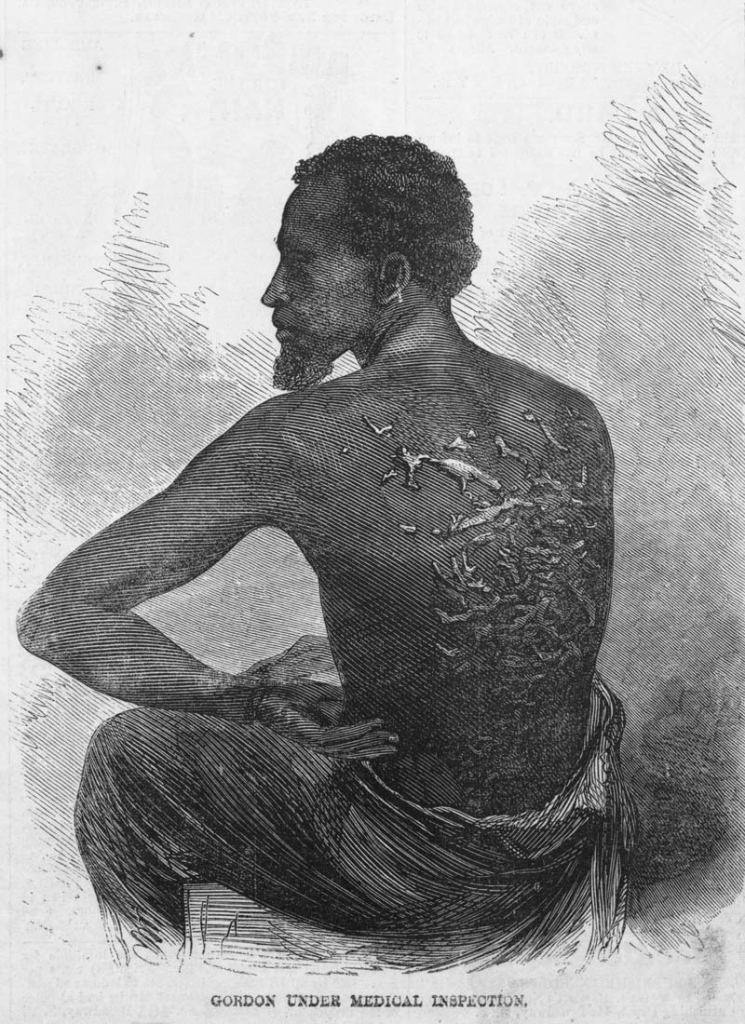
The Whitney Plantation is working to end that very American, very Caucasian practice, of not passing the word about the real histories of all of our people. In a new exhibit, they say that during that the slave revolt of 1811, fifty-five African-American men were executed, their heads placed atop pikes, to show the utter cruelty of slave-owners. The Whitney Plantation shows, just like our National Smithsonian Museums show, real images of what happened to America’s first slaves. [As anybody listening to independent news will tell you, Trumpstein wants this image hidden from history. We may need to tell him that, maybe, if the drawing of an African-American man with whip marks on his back bothers you, just maybe, you’re a human being. Deal with it, Felon 47!]
Like a responsible museum, the Whitney Plantation decided to re-create the horror for visitors. They created heads for their exhibition, which were made from ceramic and stacked on pikes, just like what was done in 1811. We need more American leaders like the ones at the Whitney.
Angola
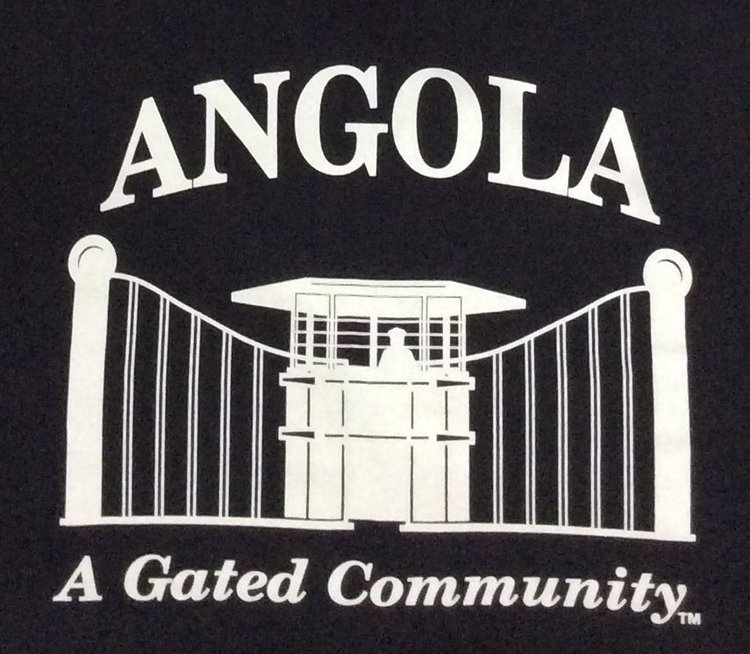
Clint travelled around to write his book, so it made sense that he didn’t travel far from Monticello to find his next example on a nearby former plantation, Angola. Unlike the Whitney Plantation, Angola never turned into a museum. It was always a very bad place and apparently always will be. After it was a plantation and with a primarily African-American inmate population, it became a convict leasing system, a modern form of slavery just like the chain gangs we see around Polk County, Florida, from time to time.
Then, it became just a prison with a fun little gift shop. Seriously? Yes! It’s just like the Alligator Alcatraz gift shop in Florida. And, yes, Floridians did that. But, on a positive note, you gotta admit: Racists, if they’re nothing else, are creative.
Blandford Cemetery
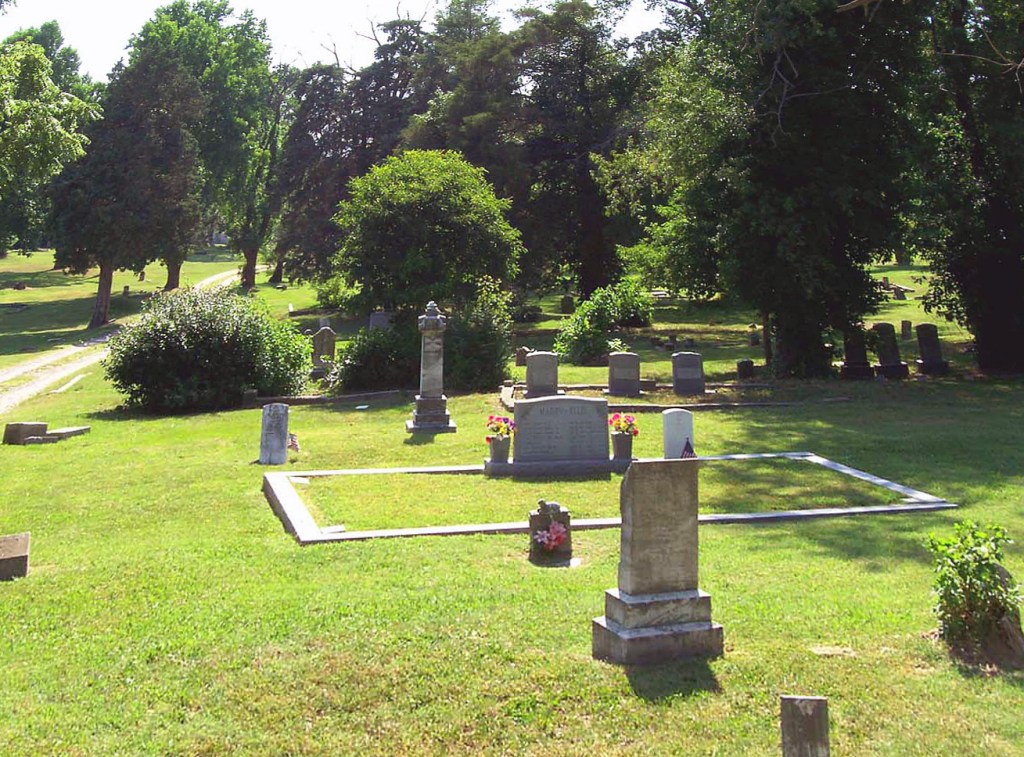
Located in Petersburg, Virginia, it is home to the “largest mass graves of Confederate servicemen in the South.” It is across the street from People’s Memorial Cemetery, now a historic African-American burial ground that was deeded to the city not long ago. This segregation of dead people over race has had negative consequences for Blandford, as it also segregates tourists and visitors, as Clint Smith found out when he noticed on his own visit that all of Blandford’s guests were White.
Like so much in the South and, actually, throughout the USA, Blandford tells only one narrative: theirs, the White story. The stories of heroic soldiers, a South fighting for states’ rights, and even that African-American men served in the Confederate military. (Yeah, right.) Clint contends that “…if a place was willing to tell a different story — a more honest story — it would begin to see a different set of people visiting,” namely, non-Whites of every shade.
Blandford staff do not, for instance, communicate with visitors that while Lincoln was running for president in 1860, “seven states with the highest numbers of enslaved people per capita, as well as the highest percentage of family slave ownership, seceded from the Union.” Virginia was one of them as well as Florida. Clint publishes an excerpt from Florida’s declaration of secession, which included the words that the Union wanted to “destroy every vestige of right growing out of property in slaves.” Clint adds, “To look at primary source documents and convince yourself that the central issue of the war was anything other than slavery requires a remarkable contortion of history.” I agree.
I’ve seen the distortions in my own community and it sucks. Anything other than the complete truth tears people apart, and anything shrouded in secrecy will also forever tear people and families apart. Fortunately, there are words. There is communication. There is a method for how the word is passed.
Galveston Island
Galveston Island is the birthplace of Juneteenth, a holiday that first became an official event in Texas before it became a federal holiday during the presidency of Joe Biden. In this chapter, I noted that Clint Smith raises a question that’s true of my own community. The upshot is that I would love to ask my local politicians, “Why?”
“‘Why … [don’t] more white people … participate in Juneteenth events. “They think it’s just a Black thing … it’s not a Black thing, it’s an American thing.'”
Clint tells us, “As the Lost Cause mythology continued into the twentieth century, Juneteenth was not only a celebration but also a seizing of public memory.” This statement is true as well in my own community, where every year, the Juneteenth organizers hang a large vinyl poster at their park entrance with the current year’s celebration design and plenty of white space. They lend out colorful markers for visitors to write their names, so it becomes historical documentation of who was there that year. Many folks, with a substantial number of them being ancestors of the original residents, are always in attendance at their annual Juneteenth event.
New York City
Having lived in New York during my formative years, I had always perceived the Big Apple as part of the progressive North while the Neanderthals, who supported slavery, lived in the South, but that was not the case at all. During America’s slave-trading years, New York City represented the nation’s second largest slave trade market in the US, right after Charleston, South Carolina. The whole city stands today in defiance of the truths about its own history. Clint said, “,,, there’s an unwillingness to acknowledge that there’s a problem.”
During his NYC visit, Clint went on a walking tour with a tour guide named Damaras Obi. She agreed with Clint in that “one of the biggest lies we are still telling in this country … New York City was good … the South, they were bad.” The fact is that NYC was just as bad as anything going on in the South. For example in 1857, New York forcibly relocated over 200 Black, Irish, and German landowners from their homes in Seneca Village, which later turned into Central Park. Seneca was one of the first communities to provide an opportunity for land ownership and stability to its Afro-American residents.
A second example exists in the most famous lady in the world, the Statue of Liberty. Clint’s book goes into a discussion of the statue’s iconic tablet that we see today. The Statue of Liberty was originally supposed to be holding broken broken chains in her left hand, but the Establishment Racists in the city at the time prevented that from happening so as to not alienate the Neanderthals in the South.
The lie about why France gave us Americans such a tremendous gift was race-based. It was presented to us by “centering the story on France and the US’ strong friendship, [which] made for a more compelling pitch to those with money, many of whom opposed Black freedom.” They eliminated the original story, which was to center “the story of the statue on emancipation, [which] only a few years after slavery had been abolished in the US … [it] would have made fundraising significantly more difficult.”
Clint says, “The Statue of Liberty is an extension of a tradition that seems to embody the contradictions in America’s promise, and a reminder that its promises have not always been extended to us.” By us Clint meant the rest of us, the ethnic minorities in America, the “non-Whites.” The strongest statement in the book and what appears to be true and actual history was this:
“The United States of America’s economy
was founded on the currency of selling human livestock.”
“Race is a byproduct of racism. In fact, race doesn’t exist..” Let me repeat that:
Race does not exist.
“‘As historian Patrick Rael writes, “Law did not merely reflect popular attitudes, it also reinforced them, lending … power to race.'” But, Americans are so very poorly educated in everything but their immediate families, that most, I believe, still really believe in the myth of race. We didn’t enslave African people, we violently enslaved human beings, which, if you think about it, is not far off in concept to cannibalism. At the very least, it was a barbaric trait in Caucasians of that time.
In contradiction to what most conservatives believe, there was extreme and horrific violence upon the birth of America. Clint Smith points out that up to “15 million Indigenous Americans living in North America upon Columbus’s arrival in 1492. By the late nineteenth century, the population had dropped to about 250,000.” Clint’s tour guide, Damaras said,” Go to any state in the country, and you will find the remains of people who have been here before we called this America.”
Gorée Island
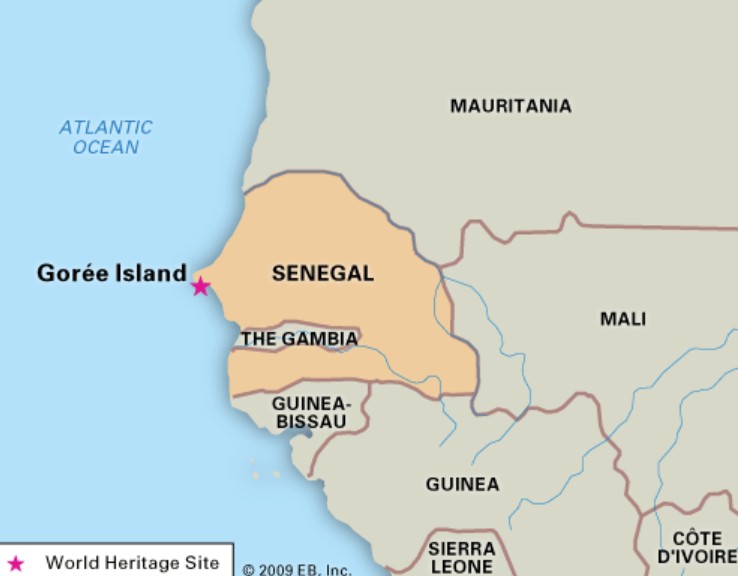
Clint Smith ends his book where slavery symbolically started, Gorée Island, a UNESCO World Heritage Centre. I say “symbolically” because Gorée represented the African slaves’ last experience on their continent before going through their respective Doors of No Return. While Gorée represented the largest number of slaves forced onto ships heading to America, there were other holding & deportation sites on Africa’s west coast.
In all, Clint Smith’s book, How the Word is Passed, is very educational and easy to read. It’s review of histories that should never be allowed to get lost in the racism of so many Americans is a tremendous contribution. Thank you, Clint, for passing the word.
Discover more from Darhlene.com
Subscribe to get the latest posts sent to your email.
